Quick Answer
For breastfeeding mothers, dates are an energy-dense snack that helps meet the extra calorie needs of lactation while supplying fiber, potassium, magnesium and a little iron. As for the popular claim that dates are a milk booster, the evidence is still preliminary: a few small studies are promising, but no large trial has confirmed it. So enjoy dates as delicious recovery nutrition, not as a guaranteed milk-supply remedy.
Why Nursing Mothers Need Extra Energy
Producing breast milk adds roughly 330–500 kcal per day above normal needs. This is where dates help: their natural sweetness comes from quickly absorbed glucose and fructose, while their fiber slows the energy release compared with table sugar. Three to five medium dates provide about 60–125 kcal of fast energy plus minerals — ideal between feeds or during late-night care.
Beyond energy, the postpartum and nursing period demands tissue recovery, milk-fluid production, and stamina against disrupted sleep. Dates are one of the oldest foods used for this purpose across cultures. For full per-variety figures, see our Dates Nutrition & Calories guide; the table below summarizes the highlights.
| Nutrient (per 100 g) | Medjool dates | Benefit for nursing mothers |
|---|---|---|
| Energy | ±277 kcal | Fuel for milk production |
| Fiber | ±6.7 g | Helps prevent postpartum constipation |
| Potassium | ±696 mg | Fluid balance & blood pressure |
| Magnesium | ±54 mg | Muscle & nerve function |
| Iron | ±0.9 mg | Supports (does not replace) iron tablets |
Figures: USDA FoodData Central.
Do Dates Truly Increase Milk Supply?
We grade the evidence so you keep realistic expectations:
- Preliminary (small human studies): A randomized study in Saudi Arabia reported that mothers eating about 10 dates a day for 4 weeks had higher milk quantity — roughly 11% more after two weeks and 23% more after four weeks — than controls. The scale was small, so results are promising but not generalizable.
- Preclinical (animal): A study in nursing rats found higher serum prolactin in the date-fed group. This supports the hypothesis, not a final human conclusion.
- Tradition: Across the Middle East and the Indonesian archipelago, dates have long been used as restorative food for new mothers.
The Prolactin & Oxytocin Hypothesis
Prolactin drives milk production while oxytocin triggers let-down. Some researchers, as cited by Alodokter and Tirto, suspect compounds in dates support these hormones, but the exact mechanism in humans is still being studied. What is clearly established is that mothers who get enough energy, enough fluids, and nurse frequently tend to have a steadier supply — and dates help on the energy side.
Myth vs Fact
- Myth: "Eating dates is sure to make milk flow." Fact: there is no guarantee; milk production is most influenced by feeding frequency and a correct latch.
- Myth: "Date syrup works better than whole dates for nursing." Fact: whole dates provide fiber and fullness lost in syrup. We recommend whole fruit.
- Myth: "The more dates the better." Fact: large portions add calories and sugar without extra benefit.
How Much and When
For healthy nursing mothers, 3–7 dates per day (about 100 g) provide energy without excess calories. For those breastfeeding while fasting, dates help most at pre-dawn and break-fast meals: their natural sugars restore energy fast, and paired with water they aid the hydration that milk production depends on. Choose soft varieties such as Sukari dates for mothers still feeling nauseous, or the very soft Rotab Bam that is easy to chew when tired.
Practical Recipes for Nursing Mothers
- Date-milk smoothie: blend 3 pitted dates, a glass of milk, and a pinch of almond powder — a high-energy morning snack.
- Date-infused water (nabeez): soak a few dates overnight and drink the water at pre-dawn for gentle hydration. We cover it fully in our nabeez guide.
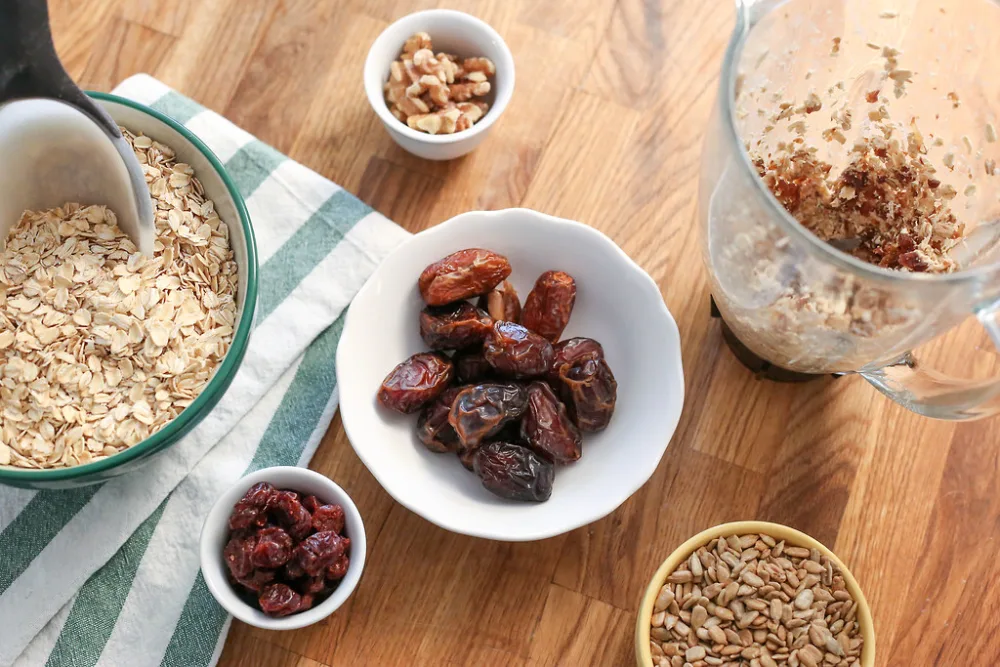
- Energy bites: blend dates with oats and sesame, roll into small balls — easy to eat one-handed while holding the baby.
- Stuffed dates: fill dates with a little unsweetened peanut butter for an energy-and-protein combo.
Other Nutrition Still Essential
Dates are only one part of a nursing mother's plate. Ensure protein intake (eggs, fish, chicken, tofu-tempeh), colorful vegetables and fruit, and adequate fluids. A nursing mother's iron needs remain high, and dates — with only about 0.9 mg iron per 100 g — are a supplement, not a replacement for prescribed iron tablets.
Notes & Limits
Dates remain rich in natural sugar, so large portions can add excess calories. Mothers with persistent gestational diabetes or a history of high blood sugar should limit to 2–3 dates and read our dates-and-diabetes guide. If your supply feels low, consult a midwife or lactation counselor, because latch technique and feeding frequency matter far more than any single food.
Date Portions by Condition
For easy reference, here is the portion guide we apply consistently across all Kurma Afiat guides:
| Condition | Daily portion |
|---|---|
| Healthy adults | 3–7 dates (±100 g) |
| Pregnancy, 3rd trimester | 6 dates (study protocol) |
| Breastfeeding | 3–7 dates |
| Diabetes | 2–3 dates (consult a doctor) |
| Children (by age) | 1–3 dates |
| Dieting | 2–3 dates (count calories) |
For nursing mothers, start at the lower end and adjust to your fullness and sugar tolerance.
Setting Expectations Wisely
It is important to place dates in their proper role. Many mothers feel let down when they expect one food to instantly multiply their milk. In reality, milk production works on supply and demand: the more often and effectively the baby nurses or milk is expressed, the more is produced. Dates play a supporting role — ensuring the mother is not short on energy so the body has fuel to make milk.
- Watch the baby's signs of adequate milk: enough wet diapers, weight gain along the curve, and a content baby.
- Stay hydrated; drinking at every feed is a simple habit that helps.
- Rest where possible — extreme fatigue can suppress milk production.
- If supply is genuinely a problem, see a lactation counselor to evaluate latch and feeding frequency.
With this framing, dates become a pleasant part of the routine, not a "must work" burden. Enjoy 3–5 as a snack, pair with water, and let them support your overall recovery.
This article is educational and not a substitute for professional medical advice.