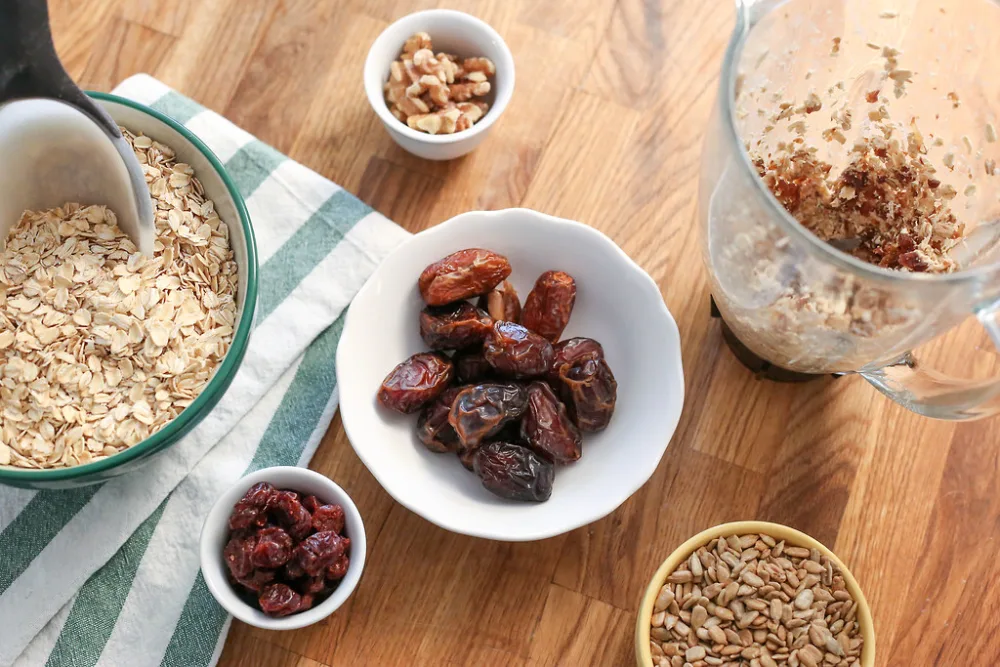
Can Pregnant Women Eat Dates?
Yes. The benefits of dates for pregnancy are supported both by their nutrition and by clinical evidence in late pregnancy. Dates provide natural energy, fiber for constipation, potassium and magnesium that help reduce cramps, and iron as a complement to anemia prevention. The key is the right portion in each trimester.
Benefits of Dates by Trimester
| Trimester | Main Benefit | Portion Note |
|---|---|---|
| Trimester 1 | Energy during nausea, easy-to-accept natural sweetness | As tolerated, listen to your body |
| Trimester 2 | Fiber for constipation, potassium for cramps, iron complement | 3–5 dates/day in a balanced diet |
| Trimester 3 | Labor preparation (6-dates protocol) | 6 dates/day from week 36 |
The 6-Dates Protocol for Labor (Trimester 3)
This is the heart of the benefits of dates in the third trimester. Al-Kuran et al. (2011, Journal of Obstetrics and Gynaecology) studied 69 mothers eating 6 dates/day for 4 weeks before their estimated delivery, versus 45 controls. The results were striking:
| Parameter | Date-eating | Control |
|---|---|---|
| Cervical dilation on admission | 3.52 cm | 2.02 cm |
| Spontaneous labor | 96% | 79% |
| Induction/augmentation use | 28% | 47% |
| Latent first-stage duration | 510 minutes | 906 minutes |
In other words, the group that ate dates regularly tended to have better cervical dilation and smoother labor. A follow-up meta-analysis also confirms effects on labor progress. We label this [Clinically Proven], but still: every pregnancy is unique, do this under your midwife or doctor's supervision.
How to Apply the Protocol
- Start around week 36 of pregnancy.
- Eat 6 dates per day, split between morning and afternoon if you like.
- Choose soft textures like Rotab Bam or Sukari for comfortable eating.
- Stop and consult if there are contraindications (e.g., uncontrolled gestational diabetes).
Easing Common Pregnancy Complaints
Nausea (trimester 1): dates' soft texture and clean sweetness are often easier to accept when appetite dips. Constipation: date fiber supports regularity, balanced with enough water. Cramps: potassium and magnesium play roles in muscle function. All of this is nutritional support, not treatment.
Myths About Dates and Pregnancy
Several myths need correcting. First, the idea that dates make the baby too big or labor difficult — this is unsupported; studies actually show dates help labor progress. Second, the idea that more dates is always better — portions should still be reasonable (the study protocol uses 6/day, not unlimited). Third, the idea that dates replace pregnancy supplements like iron or folic acid — they do not; dates are a complement, not a substitute for prescribed supplements.
When Pregnant Women Should Be Careful
Though generally safe, some situations call for caution. Mothers with gestational diabetes need to adjust portions and monitor blood sugar. Mothers with excessive weight gain should count date calories. If there is a history of allergy to certain dried fruits or specific digestive complaints, introduce gradually. In all cases, communicating with your midwife or obstetrician is the wisest step before adopting a routine consumption protocol, including the 6-dates protocol in late pregnancy.
Key Pregnancy Nutrients in Dates
Why are dates often recommended during pregnancy? The answer lies in their varied nutrition profile. Here are the main nutritional roles of dates for pregnant women:
- Natural energy: glucose-fructose helps maintain stamina, especially when nausea reduces appetite.
- Fiber: helps relieve the constipation common during pregnancy.
- Potassium & magnesium: play roles in muscle function and may help reduce leg cramps.
- Iron: as a complement to anemia prevention, paired with other iron sources and vitamin C.
Practical Tips to Add Dates to a Pregnant Diet
To keep eating dates enjoyable and not monotonous, vary the presentation. Add chopped dates to breakfast porridge or oatmeal, blend with milk or yogurt into a smoothie, or stuff dates with nuts for a nutrient-dense snack. For the 6-dates protocol in trimester 3, splitting into 3 in the morning and 3 in the afternoon often feels lighter than all at once.
Remember, dates are a complement to a balanced pregnancy diet, not the only nutrition source. Still meet your protein, vegetable, other-fruit, and fluid needs. And always discuss your diet with your midwife or obstetrician, especially with special conditions such as gestational diabetes or a particular delivery history.
Whole Dates or Date Syrup for Pregnancy?
Many pregnant women ask whether whole dates or date syrup is better. Both come from dates, but there is an important difference. Whole dates retain their fiber, which helps relieve constipation and gives longer fullness. Date syrup is more practical and easy to swallow during nausea, but some fiber is lost and the sugar is more concentrated. For the 6-dates protocol in trimester 3, the existing studies used whole dates, so whole dates are the main reference. Choose a soft texture like Rotab Bam or Sukari to keep whole-date eating comfortable.
Important Note for Gestational Diabetes
If you have gestational diabetes, the 6-dates protocol does not automatically apply — date portions need adjustment and monitoring with your doctor. See our dates-for-diabetes guide for controlled-portion principles.
Conclusion
Dates are a nutritious pregnancy companion, with strong clinical evidence for supporting labor in the third trimester. Apply the 6-dates protocol from week 36 under midwife/doctor supervision, and pick a soft variety like Rotab Bam. Need a pregnancy pack? Consult via WhatsApp +62 823-4350-8579, delivery across Jabodetabek. Note: this page is educational and not a substitute for medical advice. For specific health conditions, please consult a doctor or dietitian.